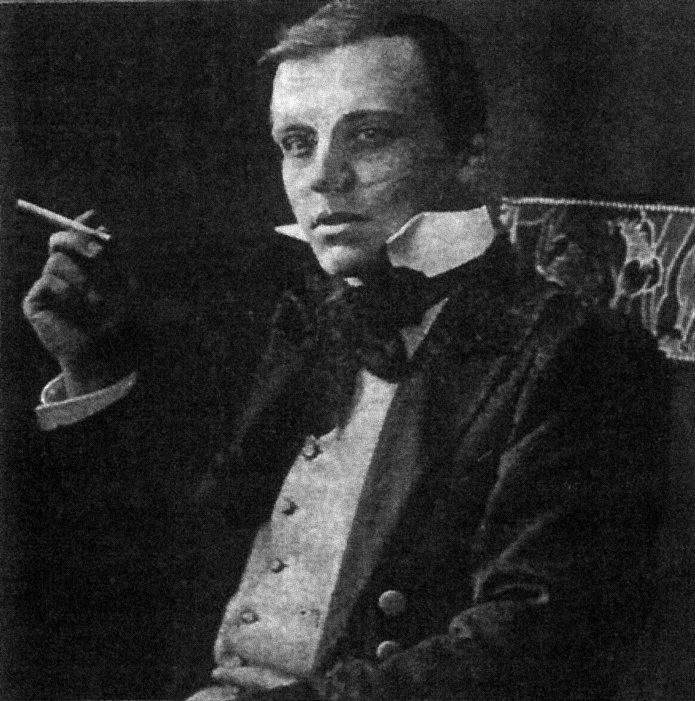
Decoding Hanns Heinz Ewers' Alraune: A Study of Identity
In the vast landscape of German literature, few names evoke the same blend of fascination and controversy as Hanns Heinz Ewers. A master of the macabre and the uncanny, Ewers carved out a unique niche with works that delved into the darkest corners of the human psyche. Among his most enduring and perplexing creations is the novel Alraune: Die Geschichte eines lebenden Wesens (Alraune: The Story of a Living Being), a chilling exploration of forbidden science, erotic obsession, and the very essence of identity. For those searching for details on the Autor Von Alraune Gestorben 1943, Hanns Heinz Ewers is the enigmatic figure whose literary legacy continues to captivate and disturb readers even decades after his passing in 1943.
Ewers' Alraune is more than just a gothic tale; it's a profound philosophical inquiry cloaked in the guise of a sensational horror story. At its heart, the novel grapples with fundamental questions about what it means to be human, the boundaries of scientific inquiry, and the malleable nature of one's self. Through the tormented journey of its characters, particularly the scientist Herbert and the titular Alraune, the narrative invites readers into a labyrinth of moral ambiguity and psychological depth that resonates with contemporary discussions on artificial intelligence, genetic engineering, and the ethics of creation.
The Genesis of Alraune: A Blurring of Worlds
The story of Alraune draws inspiration from ancient European folklore surrounding the mandrake root, a plant fabled to scream fatally when uprooted and believed to possess mystical properties, often associated with fertility, witchcraft, and the gallows. Hanns Heinz Ewers ingeniously reinterprets this legend, transforming the mythical plant into the genesis of a living, breathing being. The plot commences with the scientist Herbert, a man ostensibly driven by logic and empirical fact, who becomes utterly consumed by the mandrake legend. His fascination leads him to conduct a monstrous experiment: to impregnate a prostitute under a gallows using the semen of an executed murderer, believing that the resulting offspring, Alraune, will embody the plant's cursed nature and the criminal's malevolent soul.
This audacious premise immediately establishes the novel's central conflict: the tension between rigid science and ancient superstition. Herbert, the rationalist, crosses the line into forbidden mysticism, not out of belief, but out of a perverse desire to test the limits of what is known and to, perhaps, control the uncontrollable. Alraune herself becomes a symbol of this forbidden fusion, a creature born of scientific manipulation yet imbued with an almost supernatural allure and destructive power. Her very existence challenges conventional understanding, blurring the lines between creation and monstrosity, life and curse. This initial premise sets the stage for a narrative where the natural order is constantly subverted, compelling the reader to question the very foundations of reality and morality.
Herbert's Descent: The Shifting Sands of Identity
Central to Alraune's exploration of identity is the character of Herbert. Initially presented as a detached, analytical scientist, Herbert's journey through the novel is a terrifying descent into obsession, moral compromise, and ultimately, self-destruction. His relationship with Alraune, his "creation," becomes a twisted mirror reflecting his inner turmoil. He is at once her guardian, her tormentor, and her captivated victim, caught between an intellectual curiosity and a burgeoning, destructive attraction.
As Alraune grows, exhibiting an uncanny ability to seduce and ruin men, Herbert's rational framework crumbles. He grapples with the consequences of his actions, his initial scientific detachment giving way to a profound emotional and psychological entanglement. His identity, once firmly rooted in logic and control, becomes fluid and compromised. He is forced to confront:
- The Limits of Control: Herbert seeks to understand and control Alraune, but she consistently defies his expectations, proving to be far more than just a scientific experiment. This struggle for control reflects his own loss of self-mastery.
- Moral Ambiguity: His actions force him into a morally grey area, where the pursuit of knowledge justifies ethically reprehensible deeds. This constant negotiation with his conscience reshapes his moral identity.
- Obsession and Desire: Herbert's fascination with Alraune transcends the purely scientific, evolving into a dark, erotic obsession that warps his perception of reality and his own desires. His attraction to her, despite knowing her destructive nature, highlights his internal demons.
- The Burden of Creation: As the "father" of Alraune, Herbert is burdened by the responsibility for her existence and the chaos she unleashes. This burden forces him to question his identity as a creator and as a man.
In this regard, Herbert's character arc serves as a cautionary tale about the perils of unchecked ambition and the profound impact of one's creations on one's own sense of self. His identity is not fixed but is constantly being redefined by his interactions with the mysterious being he brought into the world. This deep psychological study of a protagonist grappling with profound inner conflict makes Alraune a compelling read for those interested in the darker aspects of human nature and the complexities of self-discovery.
Alraune as Archetype: Challenging Definitions of Being
Beyond Herbert, Alraune herself is a fascinating figure who challenges societal definitions of humanity, gender, and agency. She is not merely a femme fatale but an entity whose very existence forces a re-evaluation of what constitutes a "living being" and where the soul resides. Born of an unholy union, Alraune embodies:
- The "Artificial Human": Long before modern discussions of AI and genetic engineering, Alraune presents a chilling vision of a human being created outside natural procreation. She has a body, desires, and intelligence, but does she have a soul or a true identity in the conventional sense?
- The Destructive Siren: Alraune's irresistible allure and her inherent capacity for causing ruin speak to ancient archetypes of the temptress and the monster. Yet, Ewers portrays her not just as evil, but as a being fulfilling her predestined, cursed nature. Is she a victim of her origins, or an agent of chaos?
- A Critique of Female Identity: The novel also critically examines the societal role of women, particularly in the context of sexuality and power. Alraune's seductive power is her primary weapon, reflecting a societal fear and fascination with female autonomy and its potential for disruption. Her identity is largely shaped by male perception and fear, yet she wields immense influence.
Alraune's ambiguous nature—part human, part curse, part scientific experiment, part mythical entity—makes her a powerful symbolic element. She is a constant source of uncertainty, compelling readers to ponder the moral implications of creation and the true meaning of individuality when one's identity is intrinsically linked to one's origins and perceived "purpose." This exploration of a manufactured identity and its societal impact remains remarkably relevant today, inviting comparisons to contemporary ethical dilemmas.
The Enduring Legacy of Ewers and "Alraune"
Hanns Heinz Ewers' vision in Alraune is one of a world where the boundaries between the rational and the mystical are thin, and where the human psyche is a battlefield of desires and fears. The novel, much like the author's own life, remains a subject of intense discussion due to its controversial themes and Ewers' association with certain political movements before his death. However, its literary power lies in its unflinching exploration of psychological and social themes, employing symbolic elements and a complex narrative structure to delve into the depths of human existence.
The questions Alraune poses about identity, self-determination, the allure of forbidden knowledge, and the consequences of wielding power continue to resonate with readers. It serves as a potent reminder of the fragility of our understanding of "normalcy" and the potential for darkness within the human heart and scientific pursuit. For those seeking to understand the enduring impact of the Autor Von Alraune Gestorben 1943, Hanns Heinz Ewers' Alraune stands as a testament to his unique ability to craft narratives that are both horrifying and deeply thought-provoking. Its themes of nature's unpredictability and the struggle to navigate personal desires against societal norms are timeless.
To dive deeper into the themes and symbolism of the novel, consider exploring Alraune Explained: Science, Mysticism, and Human Desire.
Conclusion
Hanns Heinz Ewers' Alraune is far more than a simple horror story; it is a profound literary work that uses the grotesque and the uncanny to explore complex questions of identity, morality, and the human condition. Through the tragic figure of Herbert and the enigmatic Alraune, Ewers masterfully illustrates the shifting sands of self-perception when confronted with the unknown and the ethically ambiguous. The novel challenges us to look inward, to confront our own desires for control and knowledge, and to question what truly defines a living being. Its legacy, intertwined with that of its controversial author, ensures its place as a cornerstone of weird fiction and a compelling study of identity's many facets.